Homeowner’s Backflow Testing Guide & Appointment Walkthrough
Got a letter about backflow testing and not sure what to do next? Learn what it means, why it’s required, and exactly what happens during your backflow test.
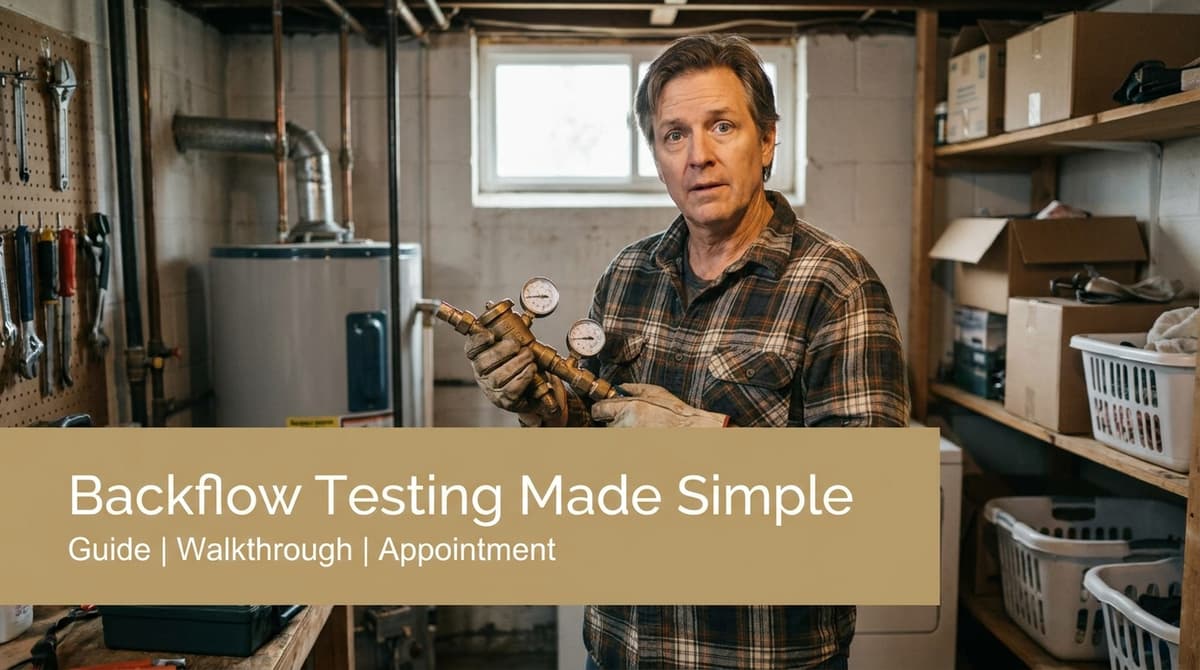
"I Got a Backflow Notice" – Now What?
We recently got a call from a homeowner — let’s call him Gary — who said, “Hey buddy, I need that backflow certificate or whatever… do you guys do that?” He had just opened a letter from his water company asking for proof of backflow testing and wasn’t exactly sure what it meant, only that he needed it done.
On top of that, his water meter and backflow preventer were a good quarter-mile down the road from his house, so he wanted to make sure we knew where everything was and what paperwork the city needed. That’s something we run into fairly often, and it’s a great example of how this whole process works.
If you’ve received a similar notice and you’re wondering what backflow testing is, why you’re being required to do it, and what actually happens during the appointment, this guide will walk you through it step by step.
What Is Backflow and Why Does It Matter?
Your plumbing system is designed so water flows one way: clean water comes in, used water and contaminants go out. Backflow is when that flow reverses and potentially pulls dirty water back into the clean water supply.
This can happen when there’s a sudden change in pressure in the water main — for example, from a broken main, a nearby fire hydrant being opened, or heavy water use in your area. Without proper protection, things like:
- Fertilizers and pesticides from irrigation systems
- Pool or spa chemicals
- Boiler or heating system water
- Industrial or commercial contaminants
could be drawn back into the drinking water supply. That’s where the backflow prevention assembly comes in. It’s a mechanical device (usually located near your meter, like Gary’s was) that’s designed to keep water from flowing backward.
Why You Got That Backflow Test Notice
Most cities and water districts require certain properties to have their backflow prevention assemblies tested once a year by a certified tester. In Gary’s case, his notice came from the water company and listed the type, model, size, and location of his device, along with his account and premise numbers.
You likely got a notice for one of these reasons:
- Annual testing is due. Your area requires yearly certification and their records show it’s time.
- You have a higher-risk connection. Irrigation systems, fire sprinklers, commercial buildings, wells, and pools often trigger stricter requirements.
- They’re missing current paperwork. Maybe your device was tested, but the results were never submitted, so they’re asking again.
The letter is basically your water provider saying, “We need proof your backflow preventer is working properly.” Once testing is done, a certified tester (that’s us) fills out the official form and sends it back to the city or water company.
What We Need From You Before the Appointment
When Gary called, he already had the letter from his water company in hand, which was perfect. We asked him to have that ready for the appointment because it contains all the important details the city wants on the test report.
For your own appointment, here’s what helps everything go smoothly:
- Your backflow notice or letter. This will list the device info and your account details.
- Clear directions to the device. Especially if, like Gary, your meter or backflow is a ways down the road or not obvious.
- Any gates or access info. Let us know if we’ll need gate codes or if you’ll need to meet us there.
Don’t worry if you’re not sure exactly what you’re looking at out by the meter. As long as we can find the device, we’ll identify it and match it to the info on your letter.
What Happens During Your Backflow Testing Appointment
Gary joked that if he looked “sleepy and puffy” at 9:30 in the morning, we shouldn’t laugh. We told him that was no problem — the actual test on our end is pretty quick and straightforward.
Here’s what you can expect during your own backflow test:
- We locate the device. If your meter is far from the house, we’ll meet you first so you can point us in the right direction.
- We verify the details. We compare the make, model, size, and serial number on the device with what’s listed on your water company’s letter.
- We hook up our test kit. Using a calibrated test gauge, we connect to the test ports on the backflow assembly.
- We run the standard tests. Depending on the device (double-check valve, RP, etc.), we check internal valves and relief openings to make sure they hold the proper pressures.
- We restore everything to normal. Valves are returned to their original positions, and water service is left as we found it.
For most residential setups, the water interruption is very brief, if you notice it at all. The whole visit typically takes 20–30 minutes once we’re at the device, assuming there are no access issues or repairs needed.
What If the Backflow Test Fails?
Sometimes a device doesn’t pass — parts wear out, debris gets inside, or valves don’t hold pressure anymore. If that happens, we’ll:
- Explain what part failed and why
- Give repair or replacement options and pricing
- Perform the repair (with your approval)
- Re-test the device and submit passing results
In many cases, a failed test can be fixed the same day with new internal parts. The important thing is that the water company receives a passing test report by their deadline.
Paperwork, Certificates, and Sending Results to the City
One of Gary’s big questions was, “What do I do with this letter once you’re done?” The good news is: we handle that part for you.
After we complete your test, we:
- Fill out the official test report or certificate with your device and account info
- Record our tester certification number and gauge information
- Submit the completed form to your city or water provider on your behalf
Most customers never have to mail anything themselves. You simply keep a copy of the report for your records and enjoy the peace of mind that your system is protected and your account is in good standing.
Getting Ready for Your Own Backflow Test
If you’re staring at a backflow notice from your water company, you’re not alone — homeowners like Gary call us about this all the time. The process is straightforward when you know what to expect:
- Have your notice or letter ready
- Know roughly where your backflow device is located
- Set a time when we can access the meter or meet you to be shown the location
From there, we test the device, complete the paperwork, and send everything in for you. One appointment, one small test, and you’re checked off with the city for another year.