Homeowner’s Guide to Backflow Testing Day
City asking for backflow testing and you’re on a deadline? Learn what backflow is, why it’s required, and what to expect on test day so you can stay compliant.
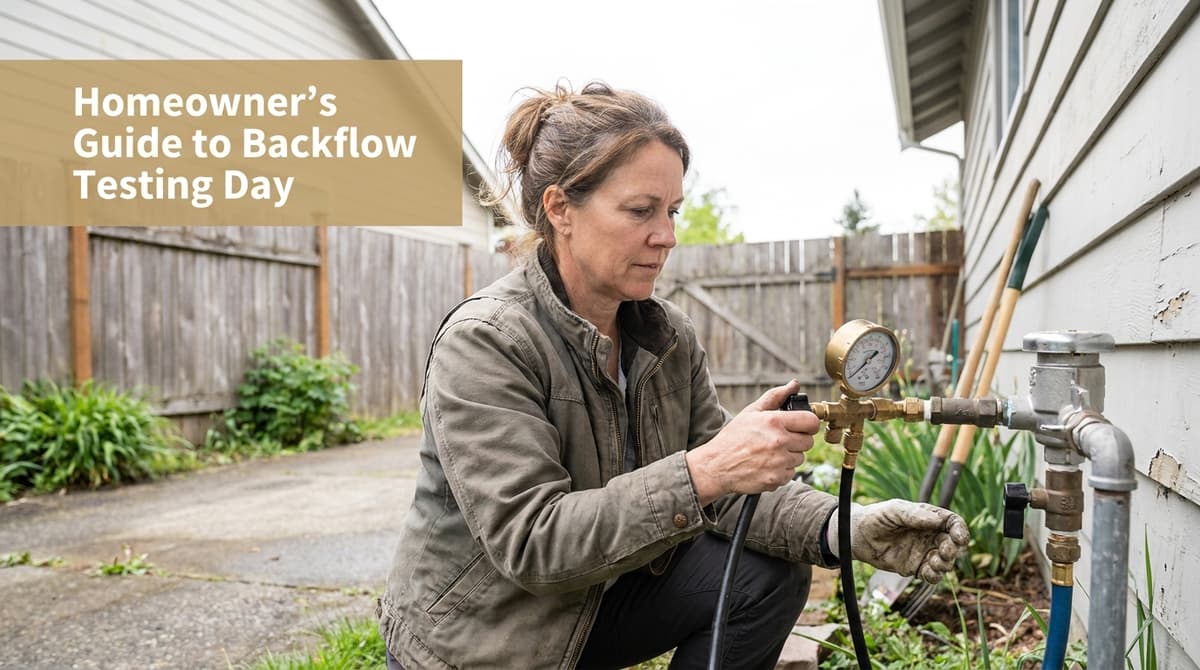
When the City Notice Shows Up and Your Tester Ghosts You
We recently got a call from a homeowner — let’s call her Kelly — who sounded a little stressed. She had just received a notice from the city that her backflow test was due that week. She had already contacted another company, but they stopped responding, and her deadline was Friday.
Kelly’s first question was simple: “Can you fit me in before this is due?” The next questions came fast: “What exactly are you testing? Why does the city care so much? Do I need to be home? What do I have to do?”
We walked Kelly through how backflow testing works and what we handle for her versus what she needs to do. Since we get these same questions from a lot of homeowners, we put together this quick guide to help you feel prepared when that city postcard lands in your mailbox.
What Is Backflow and Why Does It Matter?
Backflow is when water flows the wrong way — back toward the clean water supply instead of out toward your home or irrigation system. If pressure changes in the pipes (from a main break, fire hydrant use, or pump failure), contaminated water can get pulled backward.
That’s where a backflow prevention assembly comes in. It’s a special valve system that keeps irrigation water, fertilizer, dirt, or other contaminants from getting sucked into the drinking water lines.
When a backflow device fails, it may not be obvious to you as a homeowner. The water can look, smell, and taste normal while still being unsafe. That’s why cities require periodic testing by certified testers instead of waiting for something to go visibly wrong.
Why the City Requires Backflow Testing
Kelly’s notice from the city had a firm due date, and that’s typical. Local codes usually require testing once a year (sometimes every other year) for certain types of backflow assemblies, especially irrigation and commercial setups.
The city’s main goals are to:
- Protect the public water supply from contamination
- Confirm your device is working through a documented, pass/fail test
- Keep records of every test, tester, and result for compliance
When we test a backflow device, we don’t just tell you if it passed. We also submit the official test report electronically to the city on your behalf, so they have exactly what they need and you’re marked compliant.
How We Schedule Backflow Testing (and Why There’s No Exact Time)
When Kelly called, she was worried we wouldn’t be able to squeeze her in. Fortunately, we already had a backflow route scheduled for that Friday, which is how we handle most of our testing.
Here’s how our scheduling typically works:
- We group backflow tests on a specific day of the week.
- We lay out a route north-to-south or south-to-north to avoid bouncing all over town.
- Because we’re routing efficiently, we don’t book tight, individual time slots.
So you might see a “9–9:30 a.m.” window on your confirmation email, but in reality our arrival can vary depending on how the day goes. If you’ll be home, that’s great. If not, we make it easy to get the test done without you needing to take time off work.
What You Need to Do Before Test Day
Kelly couldn’t be home on test day, and that’s no problem. We asked her to do just a few simple things, which are the same steps we recommend for most homeowners:
- Have your city notice handy. Leave the postcard or letter out so we can double-check the device information.
- Make sure we can access the backflow device. Clear plants, debris, or objects blocking the valve, gate, or enclosure.
- Arrange payment. If you won’t be home, leave a check or cash in a pre-agreed spot (like under a doormat or in a locked box). For Kelly, we used the mat.
- Contain pets and unlock gates. If there’s a gate or fence around the area, be sure it’s unlocked for us during the day.
For residential irrigation backflow testing, our pricing is straightforward. Kelly’s test, for example, was $115 for the full test and report submission. We’ll always confirm current pricing when you schedule.
What We Do During the Backflow Test
The actual test is usually pretty quick, though we like to take our time to do it right. On your test day, here’s what we typically do:
- Locate and inspect the device for damage, leaks, or code issues.
- Hook up calibrated test equipment to the test ports.
- Measure pressures and check internal parts to confirm the assembly is stopping backflow correctly.
- Record readings and pass/fail status on the official test form.
If the device passes, we wrap up, restore everything to normal, and move on. If it fails, we’ll talk with you about repair or replacement options and what the city will require next.
After the Test: Paperwork, Results, and Your Copy
Once we finish our route and get back to the office, we handle the part most homeowners never see but the city cares deeply about:
- We submit your backflow test report electronically to the city with all required credentials and readings.
- We generate a PDF copy of the test report that shows your information, our tester information, and the results.
- We email that PDF to you as your receipt and proof of compliance.
With Kelly, everything passed on the first try. By the end of the day, her test was filed with the city, her copy was in her inbox, and that looming Friday deadline was off her plate.
Need Backflow Testing Before Your Deadline?
If you’ve received a notice from the city and your due date is coming up, don’t panic — and don’t wait for a company that might ghost you. We can walk you through the process, get you on our next route, and make sure your test results get where they need to go.
You handle the postcard and access to the device. We’ll handle the testing, paperwork, and communication with the city so you can stay compliant without the headache.