Proactive Water Heater Replacement With Navien Recirculation
Learn when to proactively replace an aging water heater and why a Navien heat pump system with recirculation and a dedicated return line can be a smart upgrade.
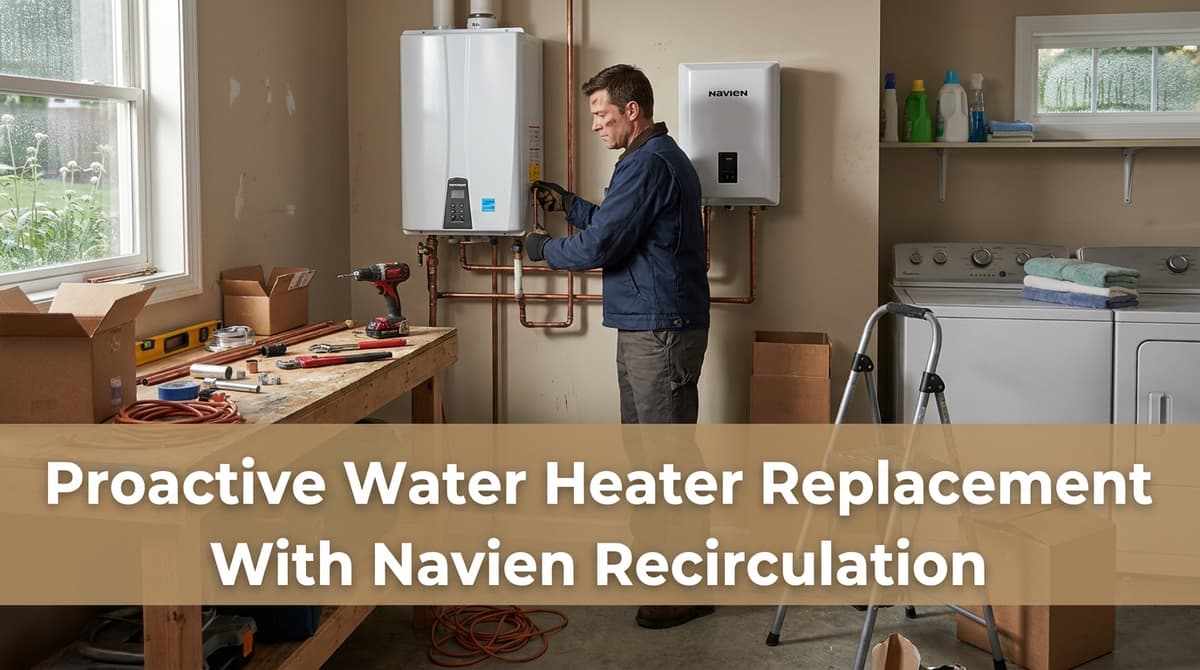
Why This Homeowner Chose Proactive Water Heater Replacement
We recently got a call from a homeowner — let’s call him Mark — who was doing some renovations and decided it was time to deal with his aging water heater. His pressure relief valve was starting to drip, and the unit itself was pushing 30 years old.
Mark told me, “It still kind of works, but the valve is leaking a little, and we’re already opening up walls. I think it’s just time to do it.” I agreed. Most tank-style water heaters last around 10–15 years. Once you’re near 30 years, that heater has lived a very full life.
On top of that, his existing gas 30-gallon tank was in the garage and needed to be moved about 20 feet to make way for the remodel. That’s the perfect moment to step back and ask: do we just replace this old tank with another basic one, or is it time to upgrade to something more efficient and convenient?
How Long a Water Heater Really Lasts
When I’m on calls like Mark’s, I often break it down this way:
- Typical tank water heater life: 10–15 years on average
- Signs it’s time to plan replacement: rust-colored water, rumbling noises, leaks, or inconsistent hot water
- Drops-dead-with-no-warning failures: most likely after that 12–15 year mark
Mark’s heater was double the typical life span, and the pressure relief valve was seeping. That valve is a safety device — if it’s leaking, it’s either failing itself or reacting to a problem inside the tank. Either way, it’s a red flag.
When a water heater gets that old, we usually recommend proactive replacement so you’re not dealing with an emergency leak, water damage, or a weekend without hot water.
Why Proactive Replacement Makes Sense During a Remodel
In Mark’s case, he was already remodeling and opening walls, and we needed to shift the water heater location by about 20 feet. That’s exactly when planning ahead pays off:
- Open walls: easier to run new gas, water, electrical, and a dedicated recirculation return line
- Design freedom: you’re not stuck with a water heater in a bad spot “because that’s where it already was”
- Less disruption later: you won’t have to tear into finished work in a few years when the old heater finally dies
Instead of dropping in another basic tank, Mark wanted to look at a heat pump/Navien system with a recirculation pump and dedicated return line. He’d already done his homework, even had PDFs and model numbers ready to review on-site. What he needed was a plumber who understood the system and could explain it clearly.
What Is a Heat Pump Water Heater and Why Pair It With Navien?
A lot of homeowners ask us what a heat pump water heater actually is. In simple terms, it’s like an air conditioner in reverse:
- It pulls heat from the surrounding air
- Uses that heat to warm the water in the tank
- Uses much less energy than creating heat with gas or electric elements
Navien makes high-efficiency systems that can be combined with recirculation technology. That recirculation pump keeps hot water moving through the pipes (using a dedicated return line), so when you turn on a faucet, you’re not waiting 30–60 seconds for hot water to arrive.
For Mark, that meant two big wins: lower utility bills over the long term and hot water faster at fixtures throughout the house.
Why a Dedicated Recirculation Line Is Worth Considering
Mark specifically asked for a Navien system with a recirculation pump and a dedicated return line. That detail matters.
There are two basic recirculation approaches:
- Dedicated return line: a separate pipe runs from the farthest fixture back to the heater, creating a loop of hot water. This is the most efficient and reliable setup.
- Crossover-type systems: use existing hot and cold lines at a fixture to “fake” a return path. These are an option when opening walls isn’t practical, but they’re not as ideal as a true return line.
Because Mark was already renovating, it made perfect sense to run that dedicated line now. The walls are open, the plumbers are there, and you get a better-performing system for decades to come.
Old Tank vs. Upgrading to a Navien System: Cost and Benefits
Homeowners often ask what makes more sense financially: keep nursing an old tank along, or invest in a high-efficiency upgrade? Here’s how we encourage people to think it through:
- Sticking with the old tank: You might avoid an upfront expense for a year or two, but you risk a sudden failure, possible water damage, and higher monthly gas or electric bills.
- Replacing with another basic tank: Lowest upfront cost, similar operating costs to what you already have, and you’ll be looking at replacement again in 10–15 years.
- Upgrading to a heat pump/Navien with recirculation: Higher initial investment, but you gain lower utility bills, better comfort (faster hot water), and a more modern, efficient system that adds value to your home.
In Mark’s situation, he was already paying for relocation and renovation. The extra cost to upgrade the technology made sense because he’d see long-term savings and improved convenience every single day.
Maintenance Tips to Extend Water Heater Life
Whether you stay with a standard tank or upgrade, a little maintenance goes a long way. Here are a few steps we recommend to homeowners:
- Flush the tank yearly: Draining a few gallons from the tank each year helps reduce sediment buildup, which can cause rumbling, reduce efficiency, and shorten the lifespan.
- Check the anode rod every 3–5 years: This sacrificial rod helps prevent the tank from rusting from the inside out. Replacing it when it’s mostly consumed can significantly extend tank life.
- Test the temperature and pressure relief valve: Make sure it operates freely and isn’t leaking. Any persistent drip is a sign to call a professional.
- Keep the area clear: Give your heater space to “breathe” and make it easy to inspect for leaks or corrosion.
With a heat pump or Navien system, we’ll also review the manufacturer’s maintenance recommendations during installation so you know exactly how to keep it running efficiently.
Quick FAQ: Heat Pump Water Heaters and Recirculation
Will a heat pump water heater work in my garage or utility room?
Often, yes. Heat pump units need enough air volume and moderate temperatures to operate efficiently. During a site visit, we look at the space, ventilation, and local climate to confirm whether it’s a good fit or if another configuration makes more sense.
Does a recirculation system waste energy by running all the time?
Modern recirculation systems can be set up with timers, thermostats, or smart controls so they only run when you actually need hot water. With a well-designed loop and a dedicated return line, you can have faster hot water and still keep energy use under control.
Can I add recirculation later if I’m not ready now?
You can add certain types of recirculation systems later, but the best time to install a dedicated return line is during a remodel, when walls are already open. That’s why we encouraged Mark to think about his long-term needs while we were planning his relocation.
Planning Your Own Proactive Replacement
If you’re looking at an older heater, seeing leaks around the valve, or starting a remodel that touches your plumbing, it’s worth taking a proactive approach like Mark did. A quick on-site visit lets us:
- Inspect your existing system and location
- Talk through standard tank vs. heat pump/Navien options
- Design recirculation and return lines if they make sense
- Give you a clear, detailed game plan — in writing
That way, you’re not just replacing an old tank; you’re upgrading your home’s comfort and efficiency in a way that fits your budget and long-term plans.