Failing Pressure Reducing Valve Replaced With a Fresh PRV
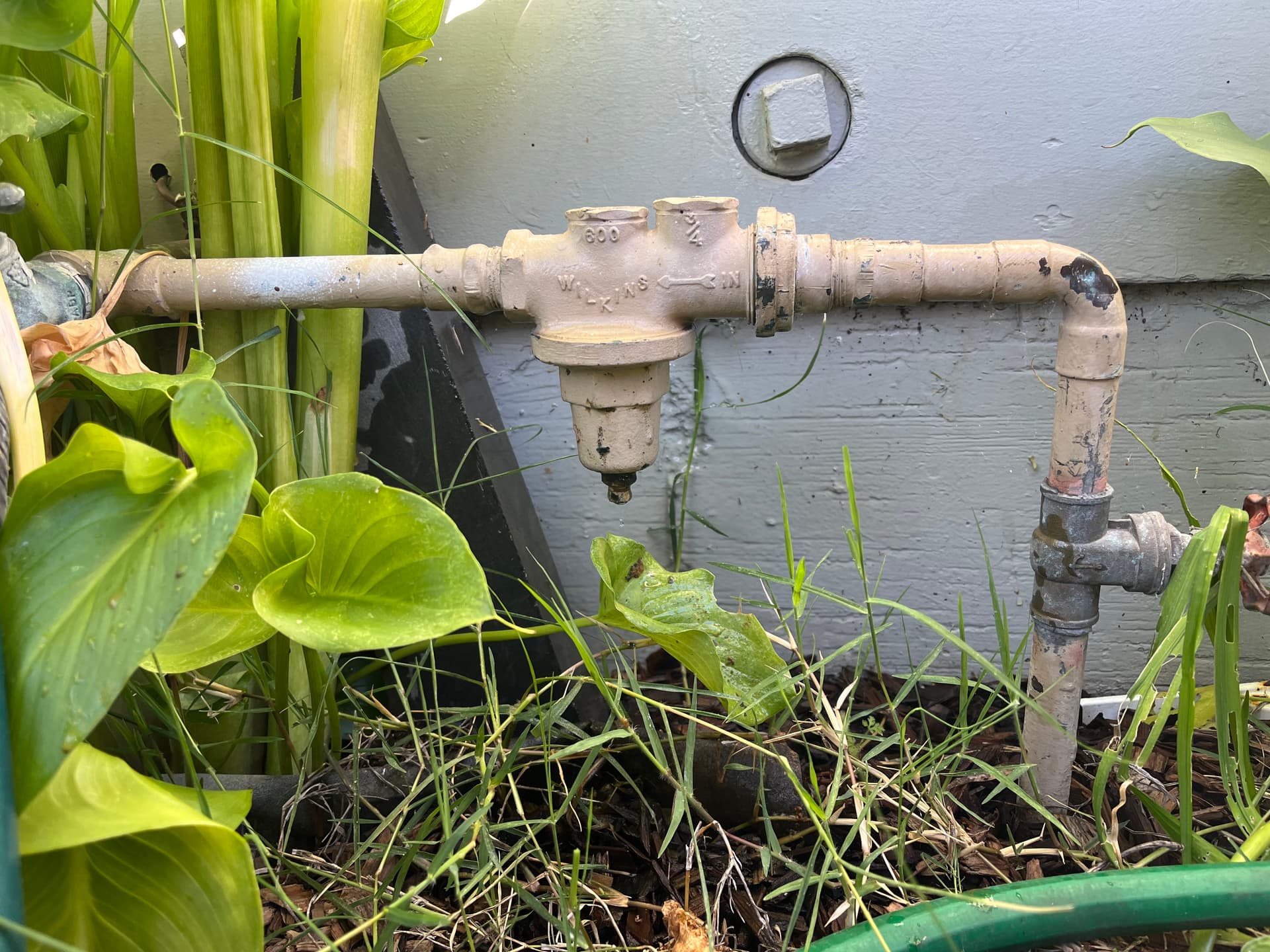
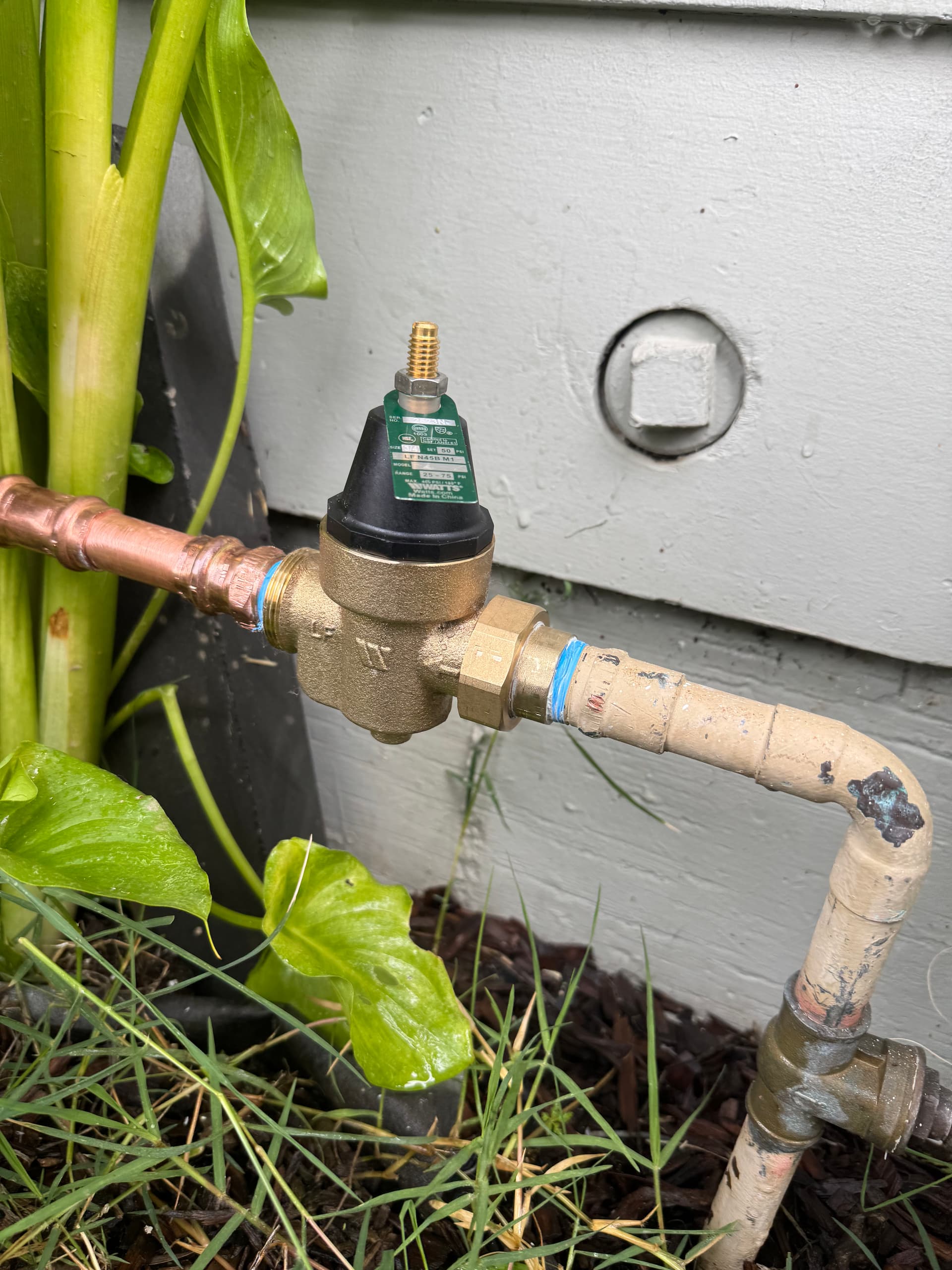
Most homeowners don't think about their pressure reducing valve until something goes wrong. And by the time something does go wrong - weak trickles from the faucet, pipes that rattle, or pressure so high it feels like a fire hose - the valve has usually been failing for a while. It's one of those quiet problems that quietly gets worse.
Here's what we were working with: a heavily corroded Wilkins PRV that had clearly been out there for years. The old cast metal body was completely oxidized, the finish was flaking, and it had long since stopped doing its job of keeping water pressure at a safe, consistent level. This is the kind of thing that stresses out your pipes, your appliances, and your fixtures without you even realizing it.
We swapped it out for a new brass PRV - the upgrade is night and day. Fresh fittings, clean connections, and a unit that's actually rated to handle the job. Proper water pressure isn't just a comfort thing. Running pressure that's too high can shorten the life of your water heater, washing machine, dishwasher, and even your backflow prevention devices. Keeping it in range protects all of it.
If your water pressure feels off in any direction - too strong, too weak, or just inconsistent - it's worth having someone take a look. A failing PRV is a straightforward fix when you catch it early. Let it go, and you're looking at a lot more than just a valve replacement.