Underground Irrigation Leak Tracked Down and Fixed
Irrigation leaks underground are sneaky. The system looks fine on the surface, zones run like normal, and nothing seems off - until you notice a soggy patch in the yard or your water bill creeps up for no obvious reason. By the time most people call us, the leak has already been quietly running for weeks.
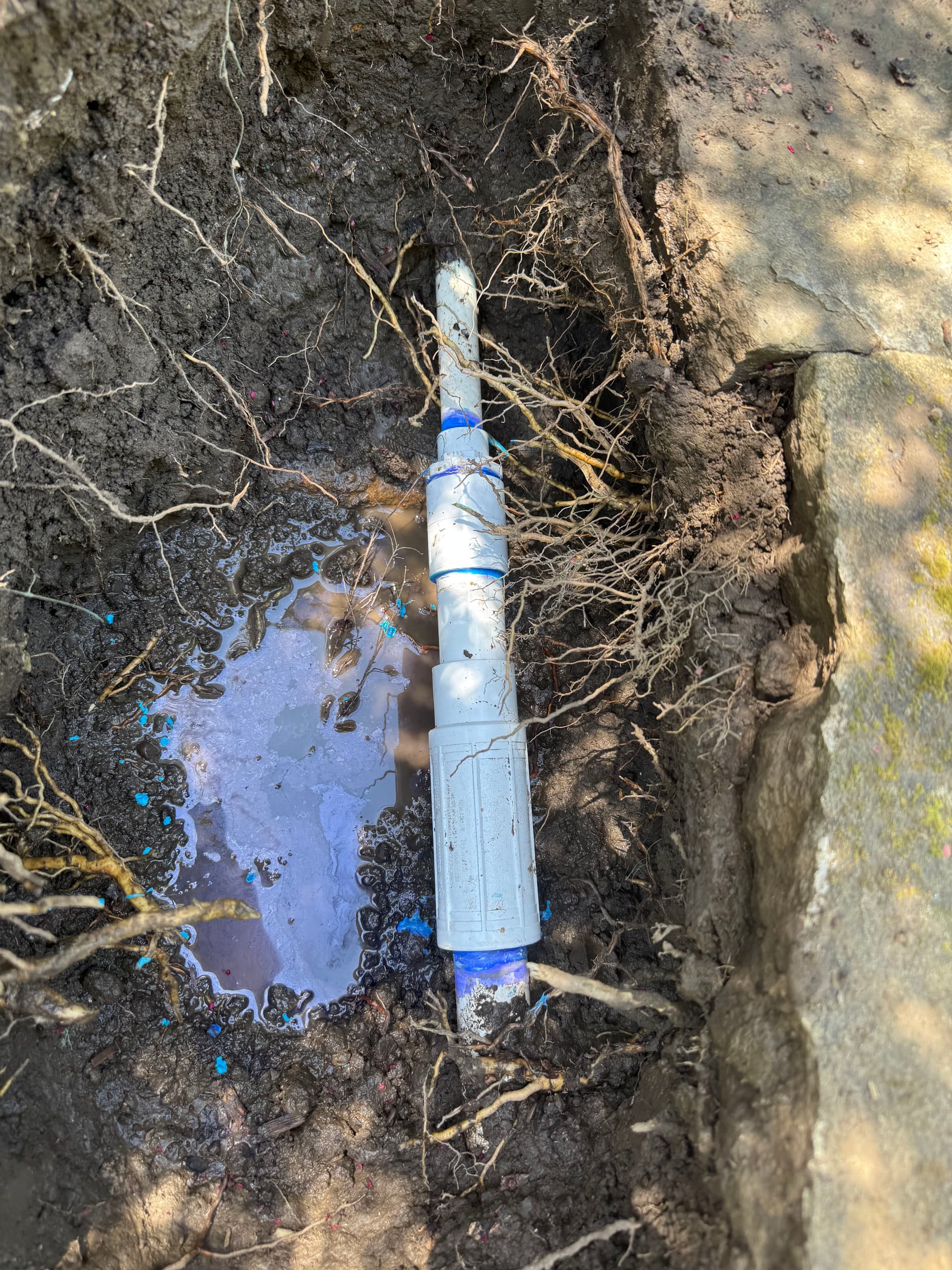
Here's what we were dealing with on this one. The leak was buried beneath the surface, tucked in alongside tree roots and compacted soil. We dug down to expose the damaged section of PVC, and that pooling water at the bottom of the trench tells the whole story - the line had been losing pressure right at a coupling point.
Once we had eyes on it, the repair was straightforward. We cut out the compromised section, fitted new couplings with fresh primer and cement, and tied everything back together properly. The blue primer marks on the fittings are a good sign - that's how you know the joints were prepped right before the pipe cement went on.
A lot of people try to ignore these kinds of leaks or assume they're too small to worry about. They're not. A slow underground leak saturates the soil around your lines, weakens surrounding root systems, and puts stress on the rest of your irrigation setup. Catching it early and doing a clean spot repair is always the better move.
This is exactly the kind of work we do with underground leak repair and trenching - find the problem, fix it the right way, and get the system back to doing its job.