What a Dirty Backflow Check Valve Actually Looks Like
Most homeowners never think about their backflow preventer - until there's a problem. And by then, it's usually a bigger deal than it needed to be. That's exactly why annual backflow testing exists.
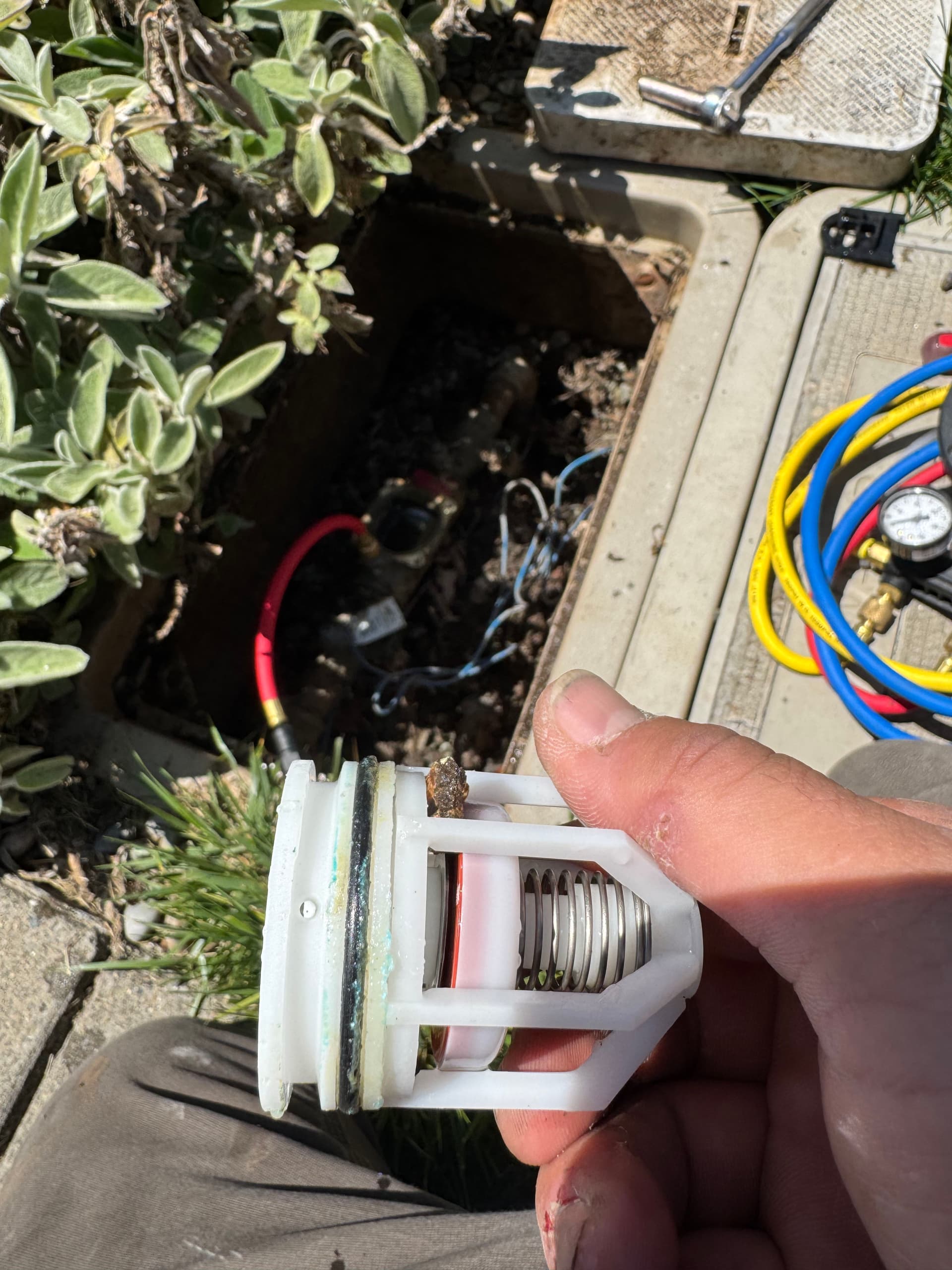
Here's what we're dealing with on a typical service call. That white plastic assembly is a check valve pulled straight out of a backflow preventer. See the debris packed into the top of it? That buildup is enough to compromise how the valve seats and seals. When a check valve can't close properly, contaminated water has a path back into your clean supply line. Not a situation anyone wants.
This is the part of the job most people never see. We open the enclosure, hook up the test gauges, and go through the whole unit - not just a quick pressure check and a signature on a form. If something looks off, we pull the internals and find out why. A failed check valve, a worn seal, or debris lodged in the wrong place - these are fixable issues when you catch them early.
The testing gauges you can see in the background are what we use to verify the device is holding the right pressures across both check valves. Everything gets documented and reported to your water authority so you stay in compliance. It's a straightforward process, but it has to be done right.
Backflow testing isn't just a box to check once a year. It's genuinely one of the better ways to protect your drinking water and avoid a costly repair down the road. If your annual test is overdue, it's worth getting it scheduled sooner rather than later.